Investigating the use of olfactory cues to redirect elephant pathways in Makgadikgadi Pans, Botswana
DOI:
https://doi.org/10.69649/pachyderm.v66i.1324Abstract
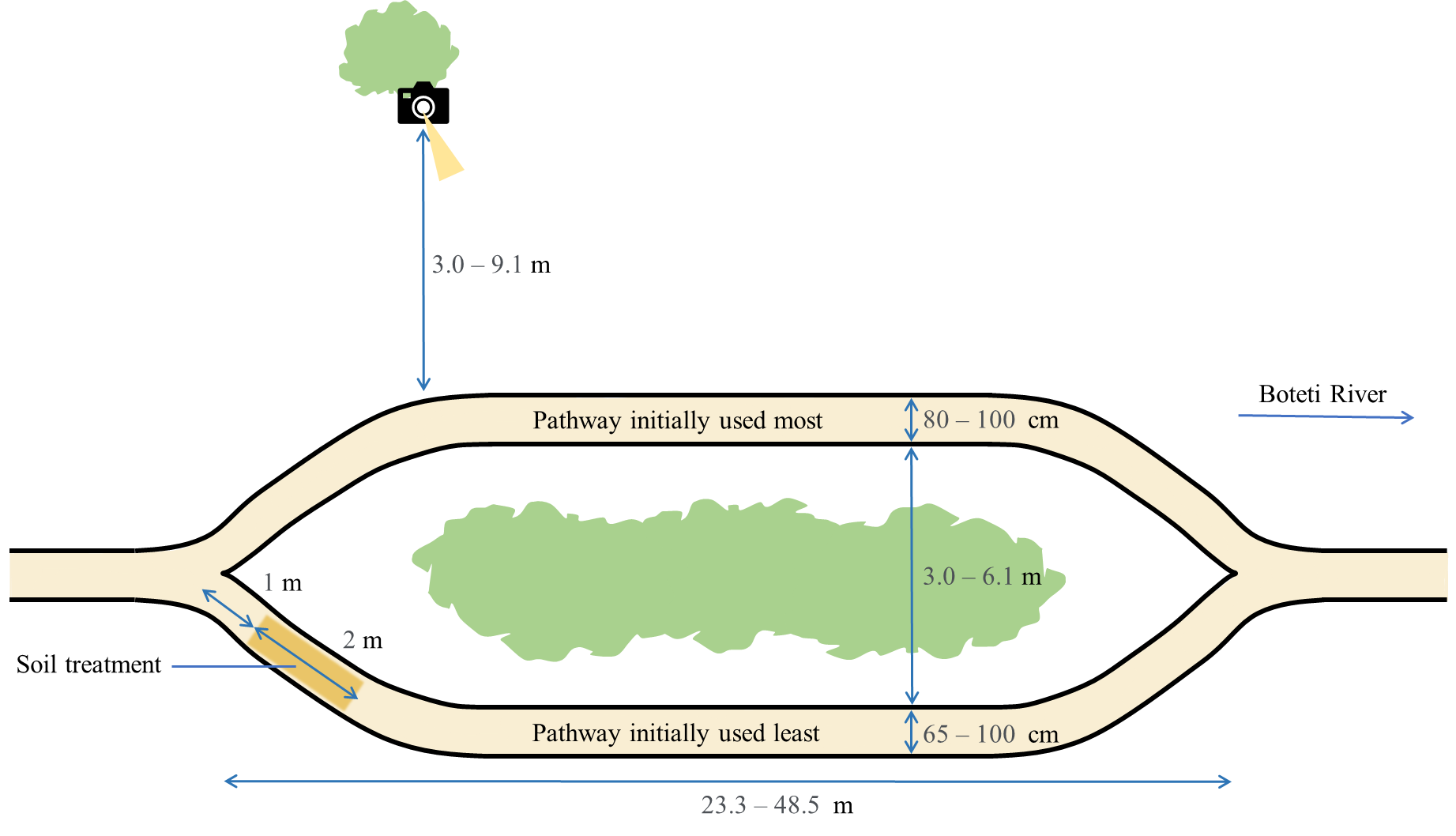
Human-elephant conflict poses a threat to both elephants and humans. This study explored the potential of using olfactory cues on African savannah elephant pathways (Loxodonta Africana), to divert elephants from crops and human settlements. Where selected pathways used by elephants branched, we applied a treatment of olfactory-cue-rich soil to the less frequently used side to assess whether this would influence the side the elephants used. Camera traps were placed adjacent to where the pathway split to capture which side the elephants chose. During the 62-day experiment, the camera traps recorded 1,500 sightings of elephants along seven selected pathways leading to the Boteti River in Makgadikgadi Pans National Park, Botswana. The results showed no immediate or sustained effect of the treatments on the usage of the pathways, possibly due to pre-existing olfactory cues on established pathways or the elephants' familiarity with the area. Elephants may have been drawn to the nearby Boteti River, reducing the potential impact of the treatments on the study-designated pathways. An interesting observation was that, at night, elephants exhibited a stronger preference for the pathways that, before the application of the treatments, had a higher rate of usage, possibly suggesting a stronger dependence on olfactory cues during darkness. While the application of the olfactory cues did not significantly impact how the elephants utilised the pathways, it is important to explore means by which we can communicate to elephants where high-risk areas are in a changing landscape and how to navigate these areas. This study highlights the need to better understand the factors that influence elephant movement patterns.
Downloads
Published
How to Cite
Issue
Section
License
Copyright (c) 2025 Vera Ruijs, Soren Faurby, Kate E Evans

This work is licensed under a Creative Commons Attribution-NonCommercial 4.0 International License.